


The Site and Context
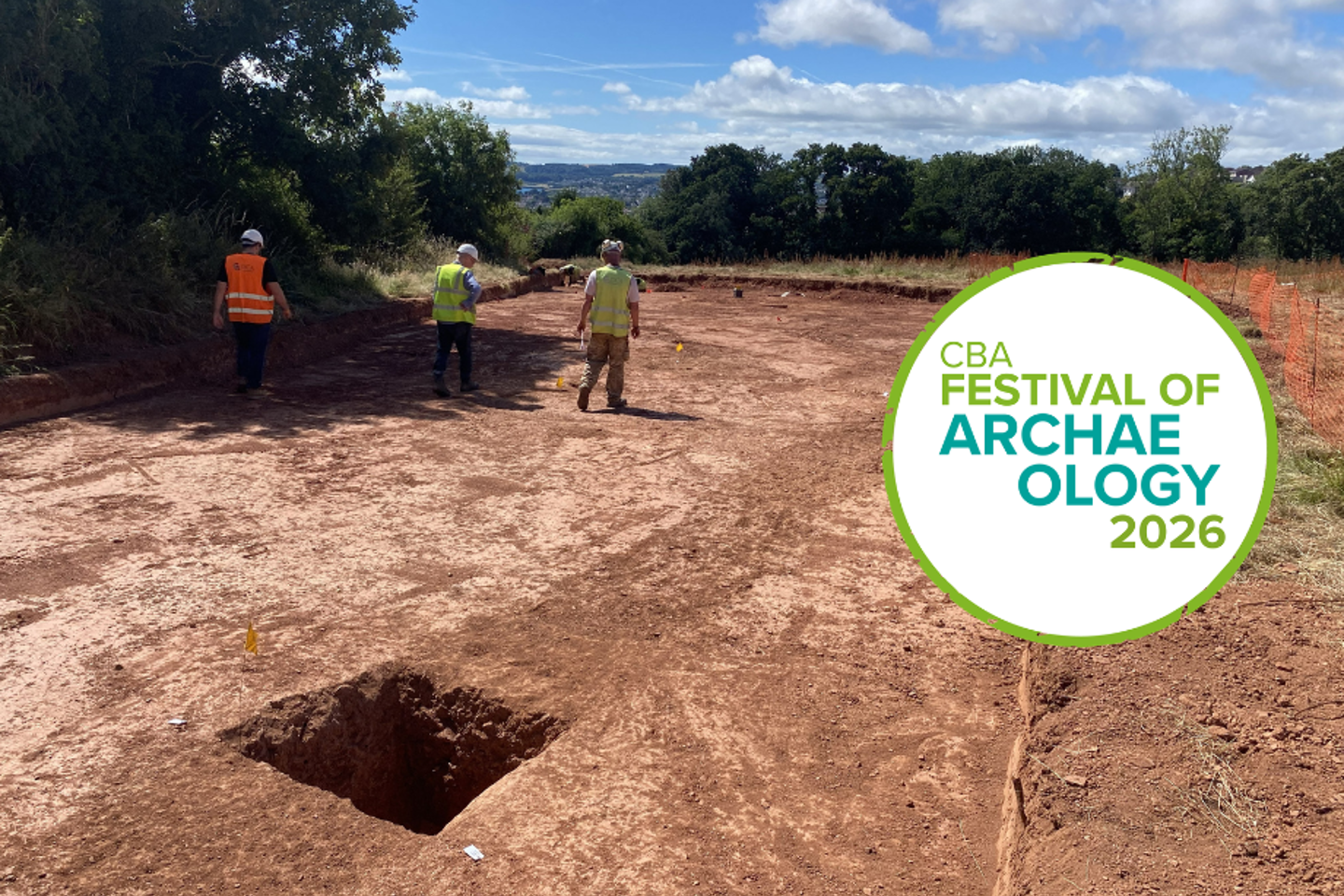
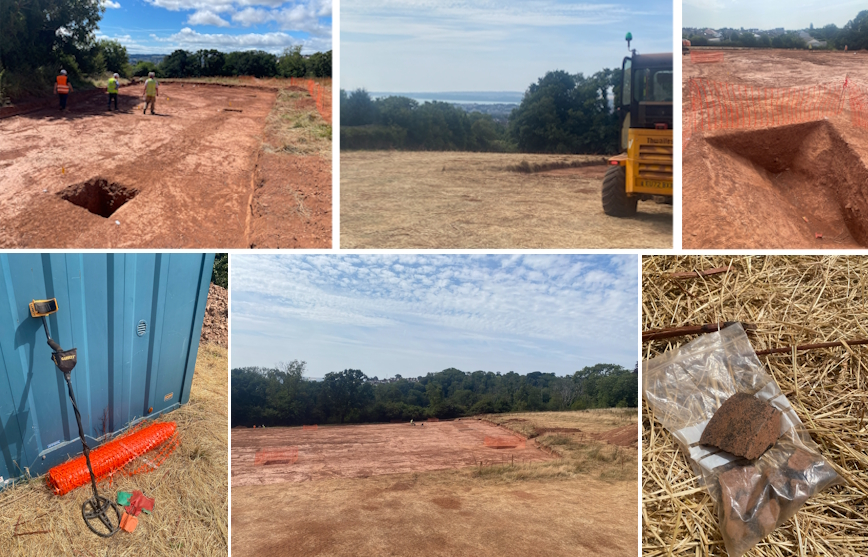
The archaeological evidence is mostly in the form of backfilled ditches that would once have enclosed areas within which people were living and/or working.
We know when these ditches were in use because of artefacts contained in the backfill, such as worked flint tools and types of pottery, only produced at certain periods of the past.
The current fields, roads, and areas of settlement are much later than both of these ditched enclosures, and both continue beyond the boundaries of the field under investigation.
The landscape would have looked quite different when they were in use. It is likely that they were surrounded by their own farmland, and the good views towards the coast may have been part of the reason for choosing to use this location.
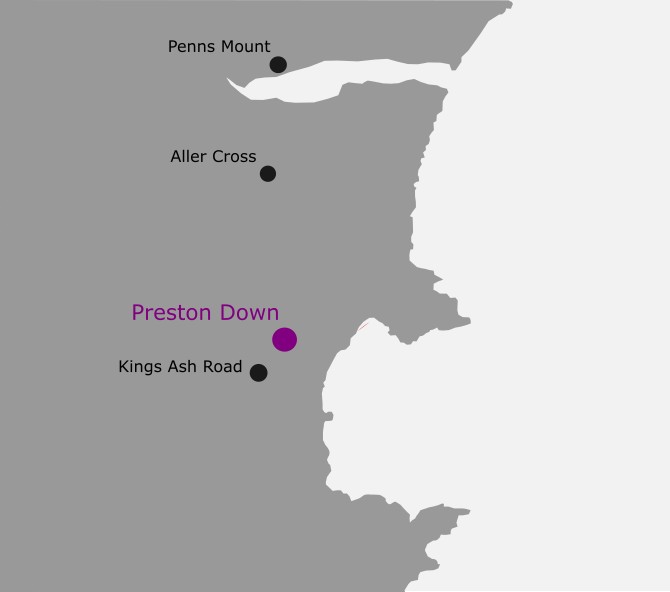
The Roman enclosure is a characteristically square shape in plan. It is one of several similar Roman sites (see opposite) found between the Teign estuary and Torbay that show early Roman influences on native settlement patterns, demonstrating a transition from Iron Age to Romanised settlement forms.
This site at Preston Down may prove to follow the same pattern, or reveal a different history. It remains to be seen as the work continues.
Previous Work on the Project
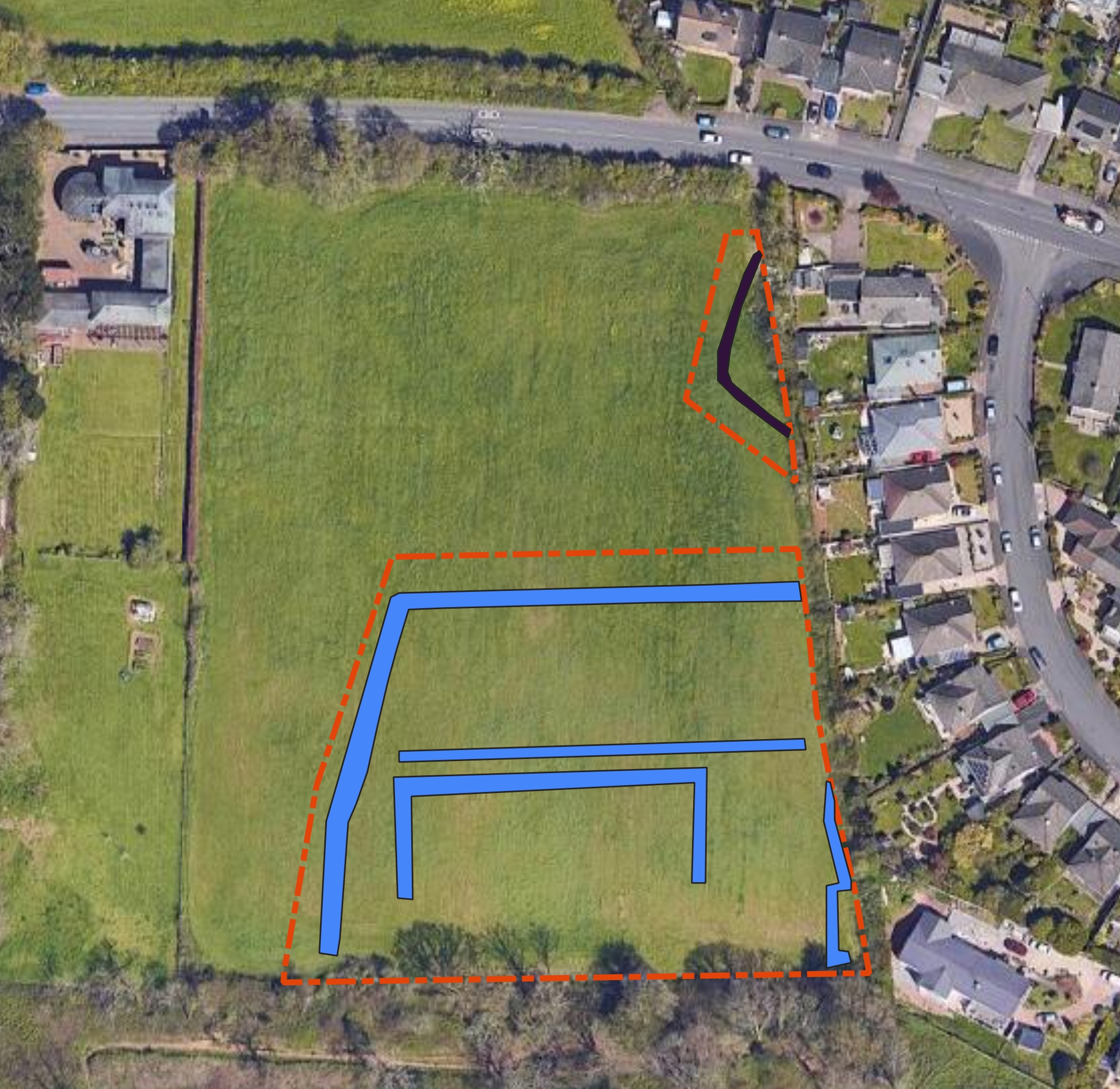
The approximate nature and extent of the archaeology within this field was known, before the current work started, from previous surveys. The plan below shows what we knew of the layout of the ditches from a Geophysical Survey carried out early in the project.
The results of the excavation work will be analysed by specialists and written up in a report forming part of Devon’s Historic Environment Record.
Latest Finds!
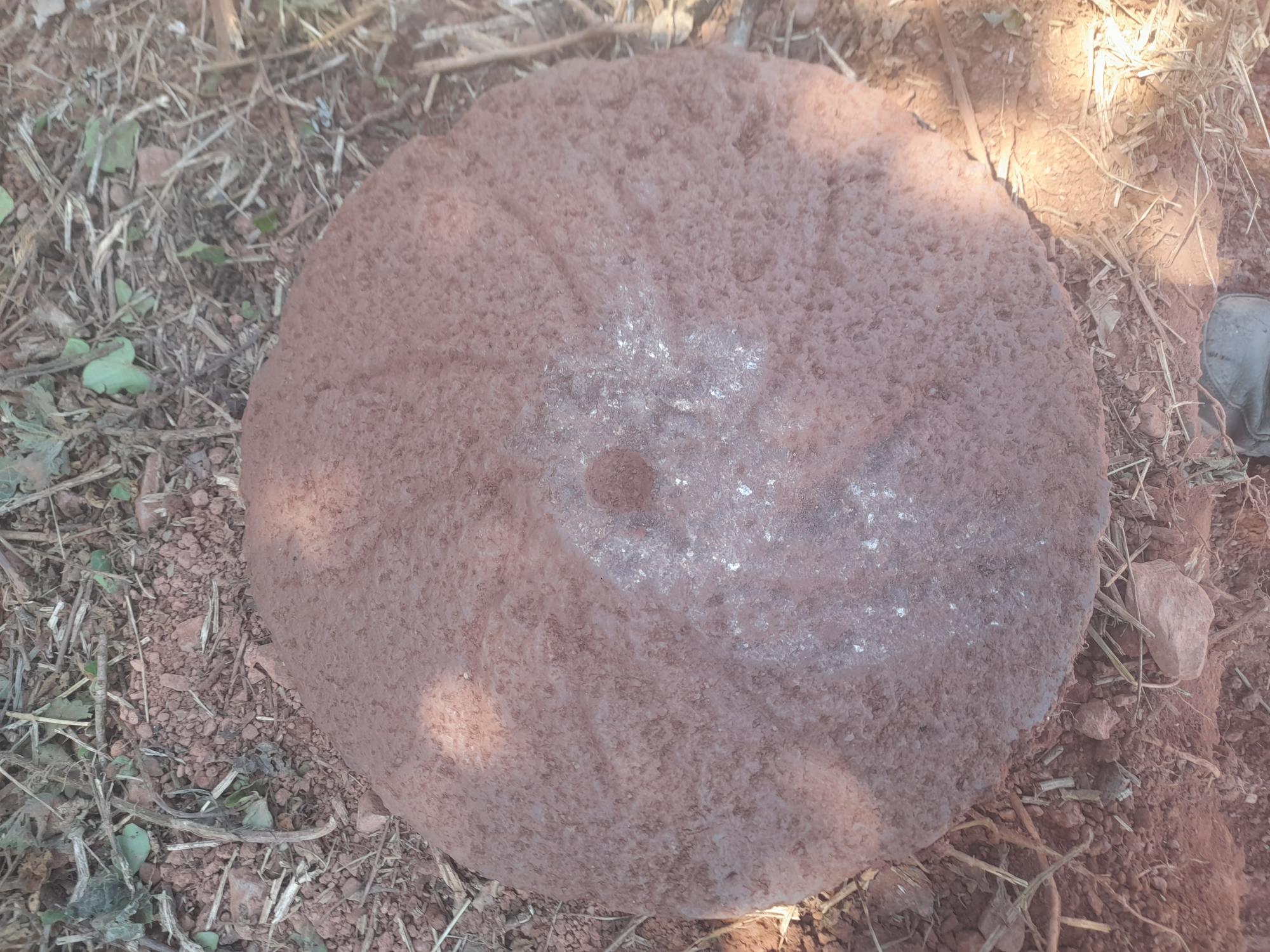
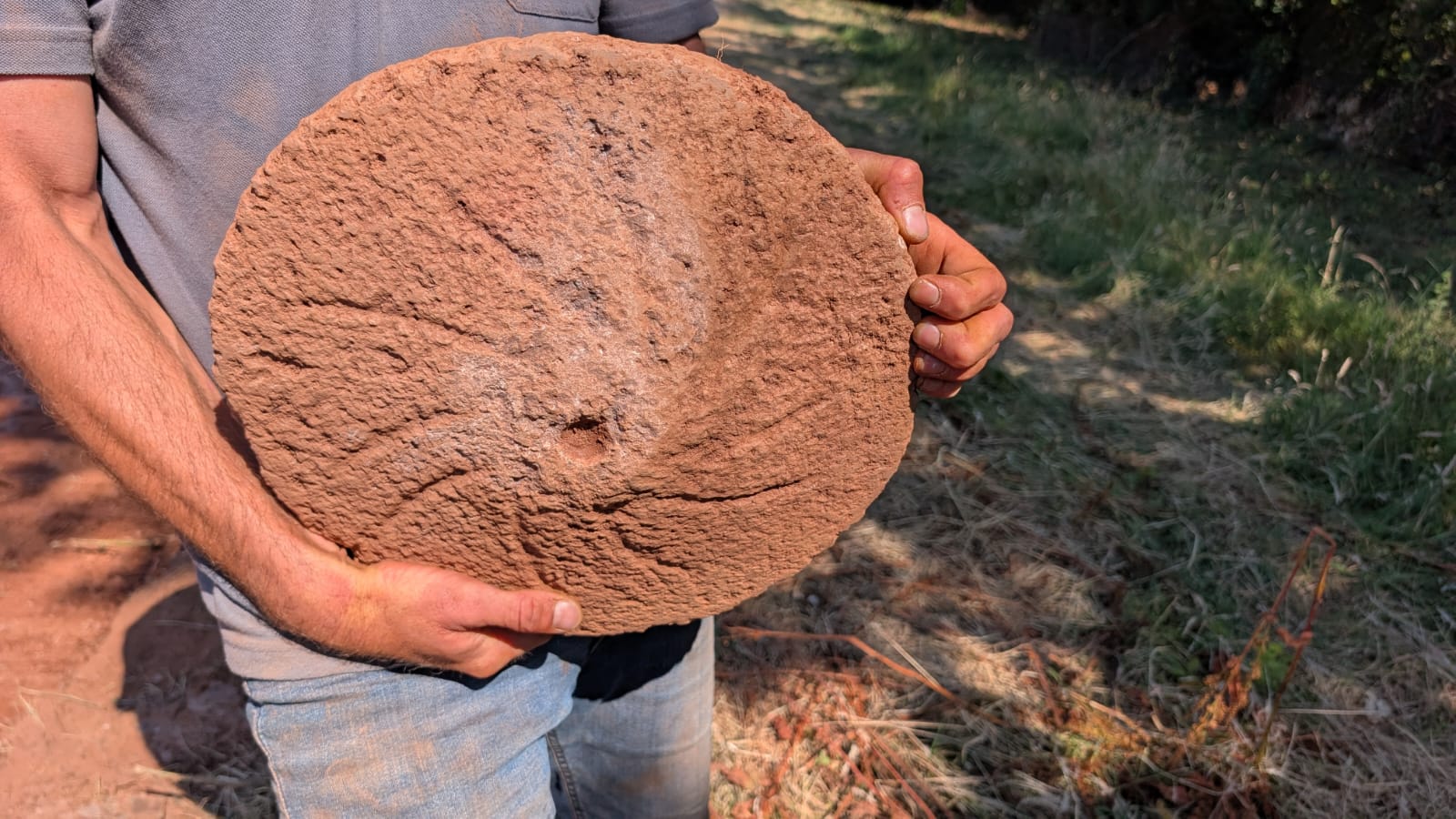
A complete rotary quern stone has been discovered in the soil overlying the Roman ditches. This artefact is about half a metre across and would have been used to mill grain. Made of a rough abrasive stone it would have been one half of the quern, which was turned by hand against a second stone to grind grain into flour. It was carefully shaped with a hole through the centre and grooves to help move the ground flour to the edges of the stone. An initial assessment suggests that it is Romano-British in origin, matching the date of the ditched enclosure, and is the most direct indication that domestic / settlement activities were taking place here.
Next Steps and Making Contact
We are available to answer any queries, so please do get in touch at alex@avalonplanning.co.uk or by telephone on 01392 581150 to speak to our Archaeology Team in Exeter.