


November 23, 2026
If your planning application has come back with an archaeological condition, you're not alone, and it needn't derail your project. Local planning authorities have a duty to consider buried remains when they make decisions. If a site has archaeological potential, they will usually ask for some form of fieldwork before or during construction. The good news is that archaeology affects only a small proportion of developments. Where it is planned for early and managed properly, it rarely causes significant delay.
At Avalon Planning & Heritage, we guide developers, housebuilders and landowners through the process from start to finish. We act as the link between you and the council's Historic Environment Team/Archaeologist, and we look for the most proportionate and cost-effective way to meet your planning requirements.
Getting started
Fieldwork is usually informed by an earlier desk-based assessment, which looks at historic maps, records and previous discoveries to judge how likely it is that archaeology survives on your site. Before any fieldwork begins, a Written Scheme of Investigation (WSI) must be prepared and agreed with the planning archaeologist. This sets out exactly what will be done and how. We prepare the WSI for you and agree it with the council. We can also advise on whether any other elements of construction can go ahead before the archaeological work is complete, so you don't inadvertently breach your conditions.
Watching briefs
A watching brief is typically required where the chance of finding archaeology is low but can't be ruled out. Your contractors carry out groundworks as normal, such as topsoil stripping, foundation trenches and service runs, while an archaeologist is on site to observe, record and, where necessary, briefly investigate anything that turns up. It is often the most economical option. There is a small risk, though: if something significant is found, work in that area may need to pause while the next steps are agreed.
Evaluations
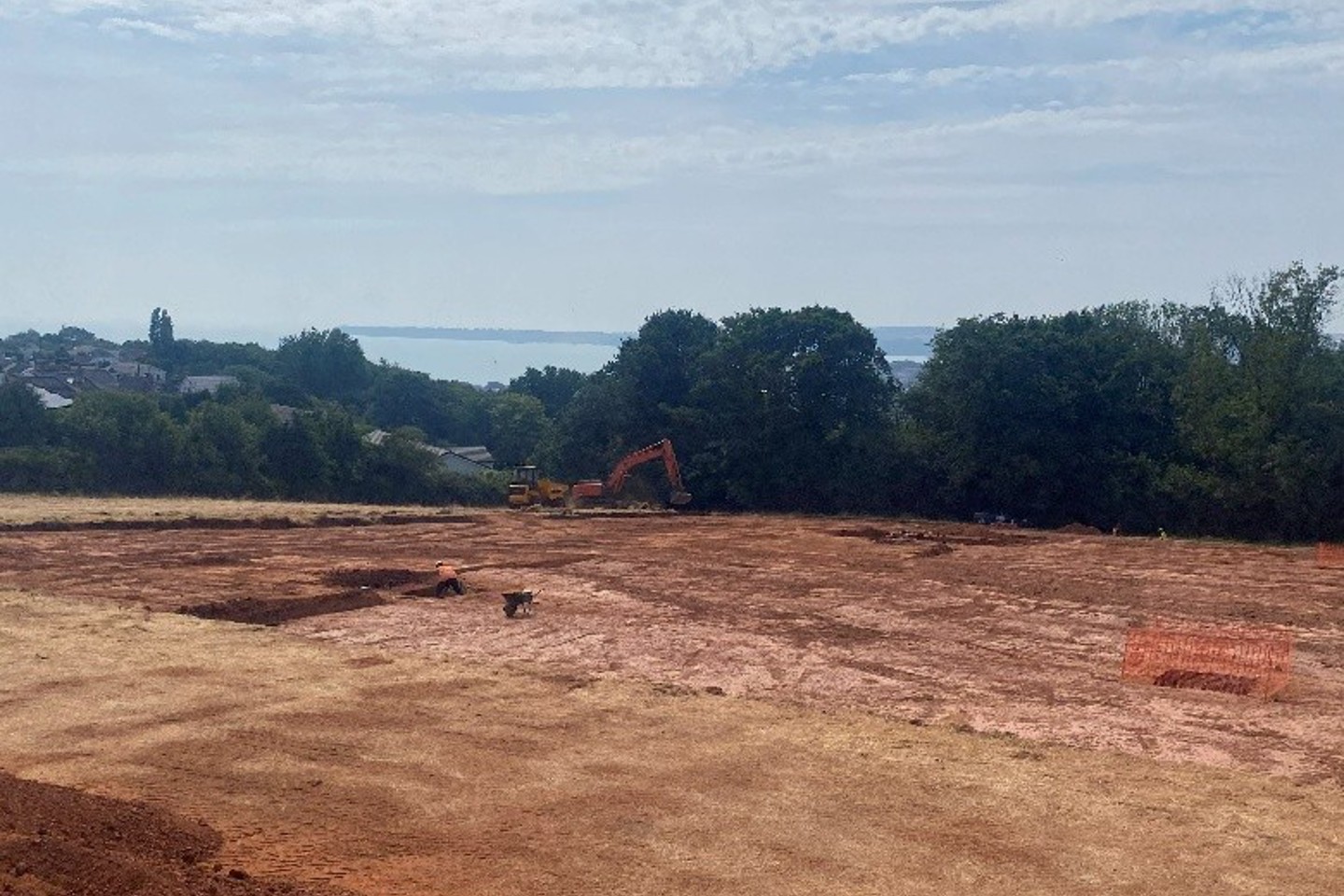
Where a site has higher archaeological potential, the council will usually ask for an evaluation before construction starts. This normally involves machine-excavated trial trenches spread across the site. The aim is to establish whether archaeology is present and, if so, how extensive, deep, old and well preserved it is. The evaluation report allows the Historic Environment Team/Archaeologist to decide what happens next. That may be no further work at all, a design change so the remains can stay safely in the ground, or a further phase of excavation. Dealing with archaeology at this early stage, rather than discovering it mid-build, is often the best way to protect your programme and budget.
Excavations
Full excavation is needed only where important remains cannot reasonably be preserved in place, for example by adjusting foundation designs or site layouts. It involves the careful hand excavation and recording of the archaeology before construction proceeds. It is followed by post-excavation analysis of finds and samples, a final report and, where results merit it, publication. Because excavation is the most involved option, we always explore alternatives with you first.
Talk to us early
The earlier archaeology is considered, the smoother the process tends to be. Whether you're preparing an application or have already received a condition, please get in touch with our team to discuss your site.